


Color Seal vs Clear Seal Grout: Which One Your Floor Actually Needs
If your tile still looks good but the grout lines have gone dark, patchy, or grimy, sealing is usually the fix, and there are two ways to do it. Clear seal is an invisible, penetrating sealer that protects the grout you already have without changing its color, and it typically needs to be redone every 1 to 3 years. Color seal is a pigmented sealer that recolors every grout line to one even shade, hides stains that cleaning cannot remove, and commonly lasts 10 years or more. Which one your floor needs comes down to two things: the condition of your grout, and whether you like its color.
Here is the quick version:
- Choose clear seal if your grout is fairly new, evenly colored, and a color you like. It costs less up front but needs reapplying every 1 to 3 years.
- Choose color seal if your grout is stained, blotchy, mismatched, or a color you have never loved. It costs more up front and usually lasts 10 years or more.
- Repair first, then seal if your grout is cracked, crumbling, or missing. No sealer of either kind will hold on failing grout.
- Prep decides how long either one lasts. Grout has to be deep cleaned, dry, and stripped of old sealer before anything new goes on.
- In Arizona, rule out hard water first. Mineral scale can make clean grout look dirty, and you do not want to pay to seal over it.
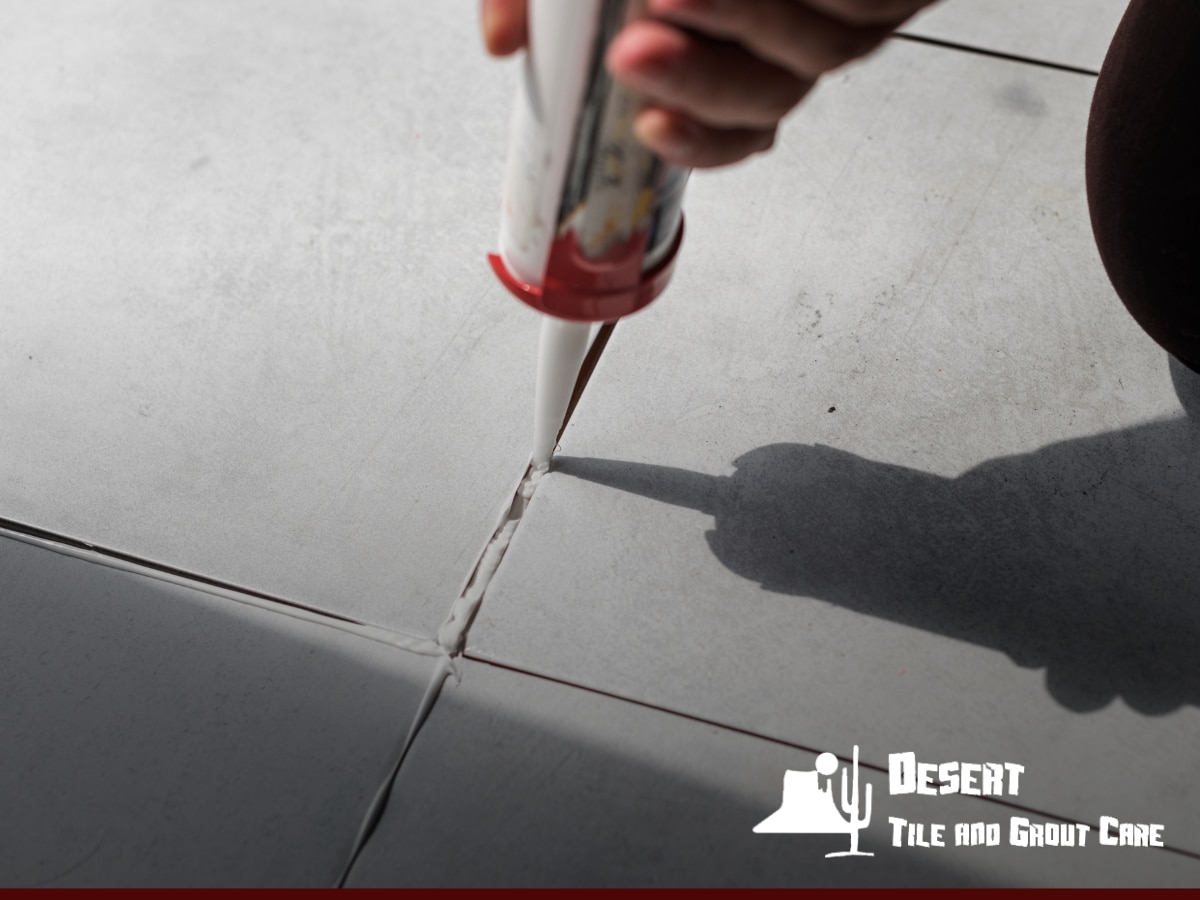
What Is The Difference Between Color Seal And Clear Seal?
The difference is where the sealer sits and what it does to the color. A clear seal soaks into the grout’s pores and disappears. A color seal bonds to the surface of the grout as a thin, tinted coating, so it changes the color and seals the grout at the same time.
- Clear seal (also called a penetrating or impregnating sealer) is a liquid that absorbs into the grout and cures just below the surface. The grout looks the same as before, but water and spills bead up instead of soaking in.
- Color seal (also called grout colorant, grout stain, or color sealer) is a pigmented sealer that gets worked into each grout joint. Most professional color sealers are waterborne epoxy formulas that recolor, seal, and refresh existing grout in a single step.
Here is how they compare side by side:
| Clear Seal | Color Seal | |
|---|---|---|
| How it works | Soaks into the pores, invisible | Bonds to the surface as a tinted coating |
| Grout color | Unchanged | Restored or changed to one even shade |
| Hides existing stains | No | Yes |
| Best for | Newer, evenly colored grout you like | Stained, blotchy, mismatched, or dated grout |
| Typical lifespan | 1 to 3 years | 10 years or more |
| Up-front cost | Lower | Higher |
| Cost over 10 years | Several reapplications | Usually one application plus routine cleaning |
| If prep is rushed | Wears off early | Can peel or flake |
| Over an old sealer | Usually fine after a deep clean | Most old sealers must be stripped first |
| DIY difficulty | Easy to moderate | Hard to do evenly |
Why Grout Needs Sealing In The First Place
Most residential grout is cement based, and cement is porous. Every grout line on your floor is a network of tiny holes that soak up whatever lands on them: mop water, spilled coffee, cooking grease, pet accidents, and the fine dust that finds its way into every Arizona home. That is why grout darkens along the traffic paths and turns black in a shower long before the tile itself shows any wear. Once moisture and grime settle in, mold, mildew, and that musty bathroom smell are not far behind.
Sealing closes off those pores so the mess stays on top, where you can wipe it away. As Fine Homebuilding’s grout comparison points out, cement grout joints need a sealer, while epoxy grout joints do not. We cover the full case in our guide on whether grout should be sealed. For most homes, the real question is not whether to seal. It is which seal fits the grout you have.
★★★★★
“The sealing has made a significant difference. I’ve noticed that the grout is much more resistant to stains and hasn’t shown signs of wear and tear, even in high-traffic areas.”
Sweta Thakkar, Google review
What Clear Sealing Does (And Where It Falls Short)
A clear sealer is a liquid that soaks down into the grout and hardens just below the surface. Once it cures, you cannot see it. The grout keeps its exact color and texture, only now water beads on top instead of sinking in, and spills sit long enough for you to catch them.
Clear sealing is the right call when your grout is still in good shape: fairly new, evenly colored, and a color you are happy with. It is the lower-cost option up front, and it keeps the natural, slightly varied look that some homeowners prefer over a uniform finish.
The catch is how long it lasts and what it cannot do. A penetrating sealer wears down with foot traffic and mopping, and it breaks down faster when acidic or heavy-duty cleaners are used. In most homes that means resealing every 1 to 3 years, sooner in showers, kitchens, and entryways. It also cannot hide anything. A clear seal over stained grout simply locks the stain in.
Try the water drop test: put a few drops of water on a clean, dry grout line. If the water beads up, the sealer is still working. If the grout darkens and soaks it in, it is time to reseal. Here is more on how to tell if your grout is properly sealed.
What Color Sealing Does (And Why It Lasts Longer)
Color sealing is a different animal. Instead of soaking in and disappearing, a color seal is worked into each grout joint and bonds to the surface as a tough, tinted layer. It does two jobs in one pass: it seals the grout against water and stains, and it restores the color, either back to the original shade or to a new one you choose.
That makes color seal the answer for grout that is permanently stained, blotchy, or mismatched after a repair, the kind no amount of cleaning will bring back. Instead of scrubbing forever or tearing the grout out and starting over, a color seal covers the damage and locks in a clean, uniform line. It is one of the main ways we make old grout look like new without regrouting.
Because it sits on the surface as a bonded layer, it holds up far longer than a penetrating sealer, and dirt wipes off a smooth sealed line instead of working into a rough, porous one. Some products also add antimicrobial protection to keep stain-causing mold and mildew from growing on the cured color.
The trade-offs are honest ones. It changes the look, so if you love the natural variation in your grout, this is not for you. It costs more up front than a clear seal. And it is not something you undo on a whim. For most people with tired, stained grout, though, that is exactly the point: you want the change, and you want it to stay.
★★★★★
“We had our ceramic tile and grout professionally cleaned and color sealed two years ago, and it still looks magnificent!”
Andrea Garwood, Google review
How Long Does Grout Color Sealing Last?
A professionally applied grout color seal commonly lasts 10 years or more in a home, while a clear penetrating sealer typically needs redoing every 1 to 3 years. Manufacturers rate some professional colorants for well over a decade, and the real number depends on the surface, the type of area, and how the floor is maintained.
A few things shorten the life of either kind of seal:
- Harsh cleaners. Acidic, high-alkaline, and solvent-based cleaners wear sealers down faster. Vinegar and bleach mixes are common culprits. A pH-neutral tile cleaner is the safe choice.
- Abrasive tools and high pressure. Stiff brushes, abrasive pads, and pressure washers can scuff or strip a color seal.
- Traffic and grit. Entryways, kitchens, and the path to the back door take the most abuse. Regular sweeping keeps grit from grinding at the surface.
- Constant moisture. Shower floors and areas that stay wet wear a sealer faster than a dry living room floor.
“Lasting” does not mean “never needs cleaning.” Color sealed grout still gets dirty, it just cleans up far more easily. Plenty of homeowners schedule a professional maintenance clean every couple of years to keep it looking like the day it was done.
Color Seal vs Clear Seal For Showers And Bathrooms
Both can work in a bathroom, and the same rule applies: match the seal to the condition of the grout. If your shower grout is sound and still a color you like, a clear seal keeps it protected, though wet shower grout usually needs resealing at the short end of that 1 to 3 year range. If the grout is stained, discolored by soap scum and minerals, or mismatched, a color seal can make the whole shower look new again.
Two shower-specific cautions. First, any sealer needs a dry, solid base. If grout is cracked, or water is getting behind the tile, that is a repair job before it is a sealing job. Second, a color seal needs time to cure. Most color sealers need the area kept dry for about a day and gentle cleaning for the first few weeks while they fully cure, so plan on skipping that shower for a day. Color sealers are also not made for anything submerged, like pools and fountains, or for areas under constant water pressure. Our post on the benefits of sealing your tile shower goes deeper on keeping wet areas protected.
When Color Seal Is Not The Right Call
Color sealing solves a lot of grout problems, but not all of them. It is the wrong fix when:
- The grout is cracked, crumbling, or missing. A color seal sits on top of the grout. It cannot hold a failing joint together, so damaged sections need to be repaired or replaced first. Here are the most common causes of grout cracking.
- The tile itself is porous and unsealed. Saltillo, unglazed tile, and some natural stone can soak up colorant along the edges of the grout lines. Porous tile may need to be sealed first so the color is not absorbed into the tile, which is why Saltillo and stone floors get their own process. See our Saltillo tile cleaning and sealing service.
- You love the natural look. If your grout is in good shape and you like its natural variation, a clear seal is the better fit.
- The area stays underwater. Pools, fountains, and other areas under constant water pressure need a different solution.
★★★★★
“Desert Tile and Grout replaced 40 cracked tiles, cleaned all tiles, and performed color seal treatment on our grout. We were blown away by the results, it looks like we have brand new flooring!”
Derek Anderson, Google review
Why The Prep Matters More Than The Product
Whichever seal you choose, it is only as good as the surface it goes onto. Grout has to be deep cleaned first, and an old, failing sealer usually has to be stripped, or you are just sealing dirt in place. Color sealing is even less forgiving. Grout joints need to be clean, dry, and free of old sealers or coatings, because most previously applied sealers have to be removed to give the colorant something to bond to. On a brand-new tile install, colorant should wait at least a couple of days after grouting.
This is most of why a professional job outlasts a hardware-store afternoon. The products are better, yes, but the real difference is in the cleaning, the prep, and applying the seal evenly so it cures the way it should. Skip those steps and a color seal peels, and a clear seal wears through in blotches. Here is a closer look at our approach to professional color sealing.
★★★★★
“Kinda looked like the previous owners sealed over dirty floors, it was nasty… His team was able to take our combination slate and slate-look tile and bring it back to near original condition.”
Ken Fox, Google review
Arizona homeowners, one more thing: our hard water leaves mineral scale that builds up right on the grout, so a floor here can look dirty when it is really mineral deposit sitting on an unsealed line. A proper clean tells us which one you are dealing with before we recommend clear or color, so you are not paying to seal over the wrong problem.
How To Choose: A Quick Decision Guide
Start with two questions: do you like the color of your grout right now, and is it still even? Then find your floor in this list:
- Grout is newer, even, and a color you like: clear seal.
- Grout is sound but looks dull or dingy: start with a professional deep clean. You may not need more than that and a clear seal.
- Grout is stained in the traffic paths and will not come clean: color seal.
- Grout is mismatched after repairs or a partial regrout: color seal, which blends old and new into one shade.
- You want a different grout color without regrouting: color seal.
- Grout is cracked or crumbling: repair first, then seal.
Sometimes the honest answer is neither one. If your grout is in good shape, a thorough cleaning may be all it needs right now.
★★★★★
“Josh came to my house and recommended I just call a company to steam clean the tile as the tile and grout are in good shape and easy to clean. He said it would be cheaper for us and he wanted to save us money.”
Ruth Demoss, Google review
Picking A Grout Color That Works With Your Tile
If you go with color seal, the color choice matters more than most people expect. The same shade can look different depending on the tile, the lighting, and the room, and the final shade can also vary with the tile’s type, color, and porosity. That is why we help you choose a grout color that matches your floor, so the finished lines look right with your tile in your own light. A shade slightly darker than the original hides everyday wear in busy areas, while a close match keeps the floor looking like the original install.
★★★★★
“We had our grout sealed and colorized. We could not be more pleased with the results… They took the time to actually show the different colors of grout on our floor so we could make an informed decision.”
Pamela Tofft, Google review
Color Seal vs Clear Seal Cost: Up Front And Over Time
Clear sealing costs less up front because it is a faster, simpler application. Color sealing costs more because every grout line is cleaned, prepped, and colored by hand. Your actual price depends on the square footage, the width of your grout lines, how stained the grout is, and whether any repairs are needed first.
The fairer comparison is over time. If a clear seal needs reapplying every 2 years, that is about five applications over a decade, plus the cleaning before each one. A color seal that lasts the full ten years often comes out even or ahead, and it looks better the entire time. We walk homeowners through both options as part of our tile and grout cleaning and sealing service, and the right answer really does depend on the grout in front of us.
Frequently Asked Questions
Does Grout Color Sealer Really Work?
Yes, when it goes onto sound, properly cleaned grout. It hides permanent stains, evens out mismatched grout, and seals the joints so they resist new stains. Most failures, like peeling or flaking, trace back to poor prep, grout that was already failing, or harsh cleaners used afterward.
Does Clear Sealer Change The Color Of Grout?
A standard penetrating clear sealer should not noticeably change your grout’s color once it cures. Some “enhancing” sealers are designed to deepen the color slightly, so check the label if you want the look to stay exactly the same.
Does Color Sealing Change My Grout Color?
Yes, and for most people who choose it, that is the point. You can match the original color to make old grout look new again, or switch to a different shade. Either way, you end up with one even color across every line.
Can I Color Seal Grout That Was Already Sealed?
Usually only after the old sealer is removed. A color seal needs to bond to bare grout, and most existing sealers block that bond. Only a few penetrating sealers are compatible, and everything else has to be stripped first, which is a big part of what professional prep covers.
Does Epoxy Grout Need To Be Sealed?
No. Epoxy grout is not porous the way cement grout is, so it does not need a sealer. It can still be color sealed if you want to change its color, but it needs a specific cleaner and prep first.
How Soon Can I Walk On Color Sealed Grout?
Fairly quickly. Most color sealers are ready for light foot traffic within a few hours, need to stay dry for about a day, and should not be scrubbed for a few weeks while they fully cure. Products vary, so we will tell you the exact cure time for your job.
Can I Just Do It Myself?
You can buy sealer at any hardware store, but the result lives or dies on the prep. Grout has to be deep cleaned, old sealer stripped, and the new seal applied evenly and given time to cure. That is the part that goes wrong on DIY jobs, and it shows up as peeling or blotching a few months later.
Will Sealing Stop Mold In My Shower?
It helps a lot. Sealed grout does not soak up the moisture that mold feeds on, so mold and mildew have a much harder time taking hold, and the grout is far easier to keep clean. In a wet shower you still want good ventilation, but a solid seal is the biggest single step you can take.
Not Sure Which One Your Floor Needs?
That is the normal place to start, and it is an easy one to settle. Request a free estimate, or call our office at 480-288-4475, and we will tell you honestly whether your grout needs a clear seal, a full color seal, or just a good cleaning first. Desert Tile & Grout Care is a family-owned, BBB A+ rated company and an Aqua Mix and StoneTech Pro Approved Contractor, restoring tile, grout, and stone in Gilbert, Mesa, Chandler, and across the Phoenix Valley. The goal is always the fix that lasts, not the biggest invoice.
★★★★★
“I just had my tile floors repaired, cleaned, stained, and sealed. Now instead of averting my eyes from dirty grout, I can appreciate the floors… You will be glad you called for an honest, no pressure experience.”
Keith Hyatt, Google review

Desert Tile and Grout Care - Josh Parkhouse
2917 E. Park Avenue Gilbert, Arizona 85234
Office: 480-288-4475
Email: [email protected]
Website: deserttileandgrout.com
Posted: November 23, 2016
Why You Should Hire a Professional for Commercial Floor Cleaning

Whitening Tiles: How To Keep Your Tile Grout From Turning Yellow

New Years Resolution: Restoring Your Tile Floor to Its Natural Beauty

The Do’s & Don’ts Of Cleaning Your Stone Floors

How to Naturally Clean Your Tile & Grout


 CONTACT US
 GET A FREE QUOTE


